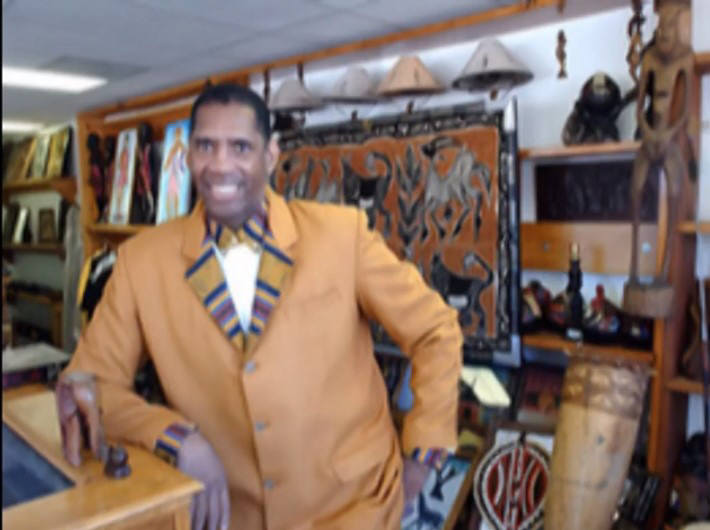
ABOUT ELMORE AFRICAN IMPORTS
Elmore African Imports is not simply a business-it is the culmination of a lifetime of activism, artistry, and cultural diplomacy led by its founder, Anthony "Amp" Elmore. To understand Elmore African Imports, one must understand the extraordinary journey of Anthony Elmore, whose life has been a bridge between civil rights, sports, film, spirituality, and African cultural integration.
In 1971, while a student at Hamilton High School in Memphis, Tennessee, Anthony Elmore led the first 18-year-old voter registration drive in the state of Tennessee. As a student at the University of Memphis, he met and joined with Rev. James Bevel, the chief strategist for Dr. Martin Luther King Jr. and one of the architects of the Civil Rights Movement. This mentorship grounded Elmore in the philosophy of cultural activism and the power of organizing for change.
Elmore studied Japanese Shotokan Karate and Zen Buddhism, disciplines that taught him discipline, focus, and spiritual grounding. In 1974, he embraced Nichiren Buddhism, becoming an activist through culture and history. At the same time, a new sport was emerging in America: Karate/Kickboxing. Elmore vowed to one day become the World Heavyweight Champion. His pursuit of martial arts was not just about fighting-it was about creating a cultural platform where African Americans could excel and inspire.
Anthony Elmore became known as the Father of Kickboxing in Memphis. His fights brought national attention to the city, and in 1981, he became the first to bring ESPN to Memphis through his championship bouts. In 1986 Elmore also brought Black Entertainment Television (BET) to Memphis, using his platform as a world champion to expand Black cultural visibility.
Inspired by Spike Lee's "She's Gotta Have It" (1986) and Robert Townsend's "Hollywood Shuffle" (1987), Elmore began production of his semi-autobiographical film, "The Contemporary Gladiator." Premiering in August 1988, the film was groundbreaking: it was the first kickboxing film in world cinema history, the first biopic of a Karate practitioner in film history, and the first film to tell the story of a Buddhist practitioner through a biographical lens. Unknown to Elmore at the time, producing a 35mm theatrical film was not just art-it was manufacturing, industry, and cultural production.
In 1990, "The Contemporary Gladiator" premiered in Nairobi, Kenya, where Elmore received a hero's welcome. The film introduced kickboxing to Kenya, promoted tourism, and showcased African-American culture abroad. This moment marked the birth of African Cultural Diplomacy. By bringing a cultural product-film-to Africa, Elmore demonstrated how art could serve as a bridge between continents, communities, and identities.
In 1998, Elmore traveled to Ghana to document the opening of the first Nichiren Buddhist temple in Ghana. While there, he discovered artisans creating beautiful products-garments, furniture, and crafts. Recognizing the potential to connect African artisans with American consumers, Elmore founded Elmore African Imports. This was not simply a retail venture; it was a continuation of his lifelong mission to integrate African culture into America.
When Barack Obama was elected the first Black President of the United States in 2008, Elmore commissioned his Ghanaian tailoring team to design an African-styled tuxedo. In 2009, Congressman Steve Cohen delivered this tuxedo to President Obama. Today, this historic garment is preserved in the Barack Obama Presidential Library, symbolizing African cultural integration at the highest level of American history.
Elmore's 5,000-square-foot home in Orange Mound, Memphis, furnished entirely with African imports, stands as a living museum of African culture. It represents the African Cultural Revolution-a movement to integrate African aesthetics, values, and traditions into American society.
By 2025, with the expiration of AGOA (African Growth and Opportunities Act), Elmore African Imports continues to advocate for a new African-American trade agreement. Without such infrastructure, African products struggle to compete in the U.S. market. Elmore insists that true African imports must be Made in Africa, not manufactured elsewhere.
Anthony "Amp" Elmore's life is a single, continuous thread: civil rights activism in 1971, martial arts and kickboxing in the 1970s and 1980s, film production in the late 1980s, cultural diplomacy in the 1990s, African imports in 1998, and the Obama tuxedo in 2009. Every chapter connects to the next. Elmore African Imports is not just about garments or furniture-it is about culture, diplomacy, and revolution.
Visitors often ask: How can I get an African tuxedo or authentic African products? At present, acquiring these items requires custom orders through partnerships with African designers and tailors. Each tuxedo or garment is handcrafted, shipped from Africa, and represents a piece of cultural diplomacy. As infrastructure develops and trade agreements evolve, Elmore African Imports will expand access, making authentic African products more readily available to American consumers. Until then, every purchase is more than a transaction-it is an act of cultural solidarity.
Elmore African Imports is the hallmark of African Cultural Diplomacy. From voter registration in Memphis to kickboxing championships, from film premieres in Kenya to tuxedos in the Obama Library, Anthony "Amp" Elmore has dedicated his life to integrating African culture into America. This is not just a business-it is a movement, a revolution, and a legacy.
Elmore African Imports: The Made in Africa Movement. The Birthplace of African Cultural Diplomacy.
Elmore African Imports is not simply a business-it is the culmination of a lifetime of activism, artistry, and cultural diplomacy led by its founder, Anthony "Amp" Elmore. To understand Elmore African Imports, one must understand the extraordinary journey of Anthony Elmore, whose life has been a bridge between civil rights, sports, film, spirituality, and African cultural integration.
In 1971, while a student at Hamilton High School in Memphis, Tennessee, Anthony Elmore led the first 18-year-old voter registration drive in the state of Tennessee. As a student at the University of Memphis, he met and joined with Rev. James Bevel, the chief strategist for Dr. Martin Luther King Jr. and one of the architects of the Civil Rights Movement. This mentorship grounded Elmore in the philosophy of cultural activism and the power of organizing for change.
Elmore studied Japanese Shotokan Karate and Zen Buddhism, disciplines that taught him discipline, focus, and spiritual grounding. In 1974, he embraced Nichiren Buddhism, becoming an activist through culture and history. At the same time, a new sport was emerging in America: Karate/Kickboxing. Elmore vowed to one day become the World Heavyweight Champion. His pursuit of martial arts was not just about fighting-it was about creating a cultural platform where African Americans could excel and inspire.
Anthony Elmore became known as the Father of Kickboxing in Memphis. His fights brought national attention to the city, and in 1981, he became the first to bring ESPN to Memphis through his championship bouts. In 1986 Elmore also brought Black Entertainment Television (BET) to Memphis, using his platform as a world champion to expand Black cultural visibility.
Inspired by Spike Lee's "She's Gotta Have It" (1986) and Robert Townsend's "Hollywood Shuffle" (1987), Elmore began production of his semi-autobiographical film, "The Contemporary Gladiator." Premiering in August 1988, the film was groundbreaking: it was the first kickboxing film in world cinema history, the first biopic of a Karate practitioner in film history, and the first film to tell the story of a Buddhist practitioner through a biographical lens. Unknown to Elmore at the time, producing a 35mm theatrical film was not just art-it was manufacturing, industry, and cultural production.
In 1990, "The Contemporary Gladiator" premiered in Nairobi, Kenya, where Elmore received a hero's welcome. The film introduced kickboxing to Kenya, promoted tourism, and showcased African-American culture abroad. This moment marked the birth of African Cultural Diplomacy. By bringing a cultural product-film-to Africa, Elmore demonstrated how art could serve as a bridge between continents, communities, and identities.
In 1998, Elmore traveled to Ghana to document the opening of the first Nichiren Buddhist temple in Ghana. While there, he discovered artisans creating beautiful products-garments, furniture, and crafts. Recognizing the potential to connect African artisans with American consumers, Elmore founded Elmore African Imports. This was not simply a retail venture; it was a continuation of his lifelong mission to integrate African culture into America.
When Barack Obama was elected the first Black President of the United States in 2008, Elmore commissioned his Ghanaian tailoring team to design an African-styled tuxedo. In 2009, Congressman Steve Cohen delivered this tuxedo to President Obama. Today, this historic garment is preserved in the Barack Obama Presidential Library, symbolizing African cultural integration at the highest level of American history.
Elmore's 5,000-square-foot home in Orange Mound, Memphis, furnished entirely with African imports, stands as a living museum of African culture. It represents the African Cultural Revolution-a movement to integrate African aesthetics, values, and traditions into American society.
By 2025, with the expiration of AGOA (African Growth and Opportunities Act), Elmore African Imports continues to advocate for a new African-American trade agreement. Without such infrastructure, African products struggle to compete in the U.S. market. Elmore insists that true African imports must be Made in Africa, not manufactured elsewhere.
Anthony "Amp" Elmore's life is a single, continuous thread: civil rights activism in 1971, martial arts and kickboxing in the 1970s and 1980s, film production in the late 1980s, cultural diplomacy in the 1990s, African imports in 1998, and the Obama tuxedo in 2009. Every chapter connects to the next. Elmore African Imports is not just about garments or furniture-it is about culture, diplomacy, and revolution.
Visitors often ask: How can I get an African tuxedo or authentic African products? At present, acquiring these items requires custom orders through partnerships with African designers and tailors. Each tuxedo or garment is handcrafted, shipped from Africa, and represents a piece of cultural diplomacy. As infrastructure develops and trade agreements evolve, Elmore African Imports will expand access, making authentic African products more readily available to American consumers. Until then, every purchase is more than a transaction-it is an act of cultural solidarity.
Elmore African Imports is the hallmark of African Cultural Diplomacy. From voter registration in Memphis to kickboxing championships, from film premieres in Kenya to tuxedos in the Obama Library, Anthony "Amp" Elmore has dedicated his life to integrating African culture into America. This is not just a business-it is a movement, a revolution, and a legacy.
Elmore African Imports: The Made in Africa Movement. The Birthplace of African Cultural Diplomacy.