The Made in Africa Movement
Vision
Anthony “Amp” Elmore believed that the strength of any community lies in its ability to support itself. His philosophy was simple: shop within the community, uplift those who provide the best service and products, and build prosperity from within. Extending this principle to Africa, Elmore envisioned a movement that would connect African Americans with Africa through trade, culture, and diplomacy. This vision became the **Made in Africa Movement**.
Launch in Ghana (2005)
In 2005, Elmore traveled to Accra, Ghana, to launch the Made in Africa Movement. His goal was to purchase “everything African” and demonstrate that African products could be of higher quality, more affordable, and culturally transformative when brought into the American market. He sought to prove that doing business with Africa was not only possible but essential for cultural integration and economic empowerment.
The All African House
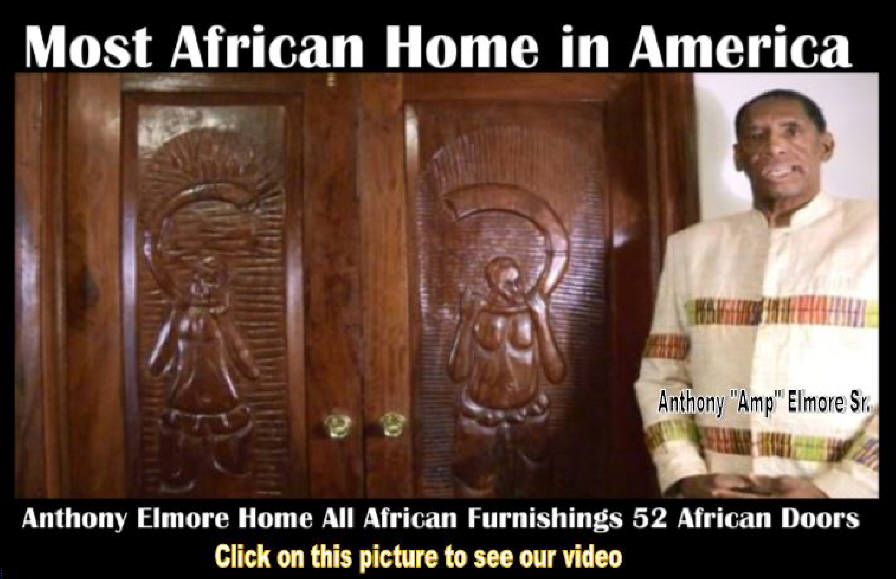
Elmore’s 5,000-square-foot home in Orange Mound, Memphis, became the centerpiece of his vision. The house required over 50 doors, along with furniture, curtains, art, and accessories. Rather than relying on imports from outside Africa, Elmore worked directly with Ghanaian artisans to custom design every piece. His home became the **first All African House in America**, a living model of what African cultural integration could look like.
Challenges and Lessons
The journey was filled with challenges. American nails could not penetrate African hardwoods, saw blades broke against dense Idom wood, and outdoor furniture glue failed in cold American climates. Ghanaian artisans lacked access to proper stains, resorting to Kiwi shoe polish to finish the doors.
Even cultural misunderstandings arose—when Elmore commissioned carved doors, artisans initially created figures with white hair and European features. Elmore corrected them, insisting on authentic African imagery. These experiences revealed the urgent need for education and infrastructure to prepare African artisans for global trade.
Breaking Stereotypes
Elmore’s mission was not only about furniture and fashion—it was about breaking stereotypes. By designing and decorating his entire home with African products, he sought to challenge the negative images of Africa as primitive and instead showcase the immense opportunity and dignity of African craftsmanship. His All African House stood as a model for what Africa could be and how cultural integration could enrich American life.
The Obama Tuxedo
In 2008, Elmore extended his vision from house to fashion. He commissioned his Ghanaian tailoring team to design an African mud cloth tuxedo for President Barack Obama. In 2009, Congressman Steve Cohen delivered the tuxedo to the President.
By December 2025, this historic garment was placed in the Barack Obama Presidential Library, representing the highest and most prestigious moment in African designer fashion in American history. This act symbolized the success of Elmore’s mission and the recognition of African culture at the highest level.
Legacy
Anthony “Amp” Elmore’s Made in Africa Movement is not simply about products—it is about reclaiming Africa’s place in the global economy, creating jobs, and fostering cultural diplomacy. His journey from Memphis to Ghana, from doors to tuxedos, from challenges to triumphs, proves that the Made in Africa Movement is both a revolution and a legacy. It continues to inspire and educate, showing the world that African culture belongs in America with pride and authenticity.
Made in Africa Movement: From Orange Mound to Accra, from doors to tuxedos, from vision to legacy.